
Not all personality traits are positive. The Dark Triad—narcissism, Machiavellianism, and psychopathy—represents the darker aspects of human personality. While these traits exist on a spectrum in everyone, elevated levels can significantly impact relationships and success. Understanding them helps you recognize patterns in yourself and others.
Discover Your Shadow Side
Take our comprehensive assessment to understand where you fall on the Dark Triad spectrum.
Take the Dark Triad Test →What is the Dark Triad?
The term "Dark Triad" was coined by psychologists Delroy Paulhus and Kevin Williams in 2002 to describe three overlapping but distinct personality traits that share certain malevolent characteristics:
- Narcissism - Grandiosity, entitlement, and need for admiration
- Machiavellianism - Manipulation, strategic thinking, and moral flexibility
- Psychopathy - Callousness, impulsivity, and lack of empathy
These traits exist on a spectrum in the general population. Most people have some level of each trait—and in moderation, they can even be adaptive. The problem arises when these traits become extreme and cause harm to oneself or others.
Research shows that about 1-2% of the population scores very high on all three traits. However, subclinical levels are much more common and can still significantly impact behavior and relationships.
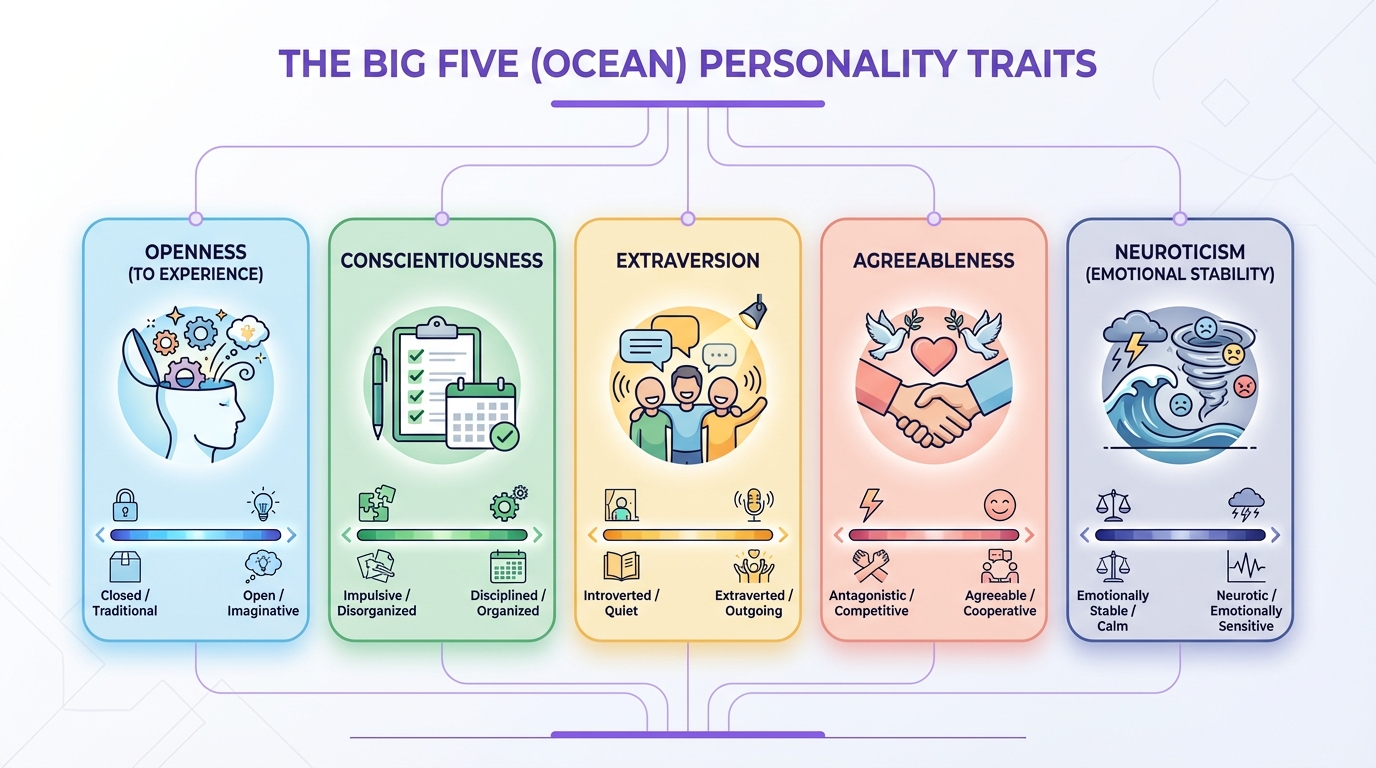
Understanding the Dark Triad complements knowledge of personality types and the Big Five traits by illuminating the darker aspects of human nature.
Narcissism Explained
Narcissism is characterized by grandiosity, a sense of superiority, and an excessive need for admiration and validation from others.
Key Characteristics
- Inflated sense of self-importance
- Preoccupation with fantasies of success, power, or beauty
- Belief that they are special and should only associate with high-status people
- Need for excessive admiration
- Sense of entitlement
- Willingness to exploit others for personal gain
- Lack of empathy
- Envy of others or belief that others are envious of them
- Arrogant behaviors and attitudes
Types of Narcissism
Grandiose Narcissism: The classic form—outwardly confident, dominant, and attention-seeking. These individuals believe they are superior and behave accordingly.
Vulnerable Narcissism: Characterized by insecurity, defensiveness, and hypersensitivity to criticism. Despite appearing shy or withdrawn, they harbor the same entitled and self-centered worldview.
The Narcissistic Paradox
Narcissists project supreme confidence but underneath lies deep fragility. Their grandiosity is a defense mechanism against core feelings of inadequacy. This is why criticism can trigger such intense reactions—it threatens the carefully constructed self-image.
Narcissism in Moderation
Mild narcissistic traits can be beneficial: self-confidence, ambition, and leadership presence. The problem is when these traits become rigid, excessive, and harmful to others.
Machiavellianism Explained
Named after Niccolò Machiavelli, the 16th-century political philosopher who advocated for manipulation in politics, this trait describes a cold, strategic approach to social interactions.
Key Characteristics
- Strategic manipulation of others
- Cynical view of human nature
- Prioritization of self-interest
- Emotional detachment in relationships
- Willingness to deceive for personal gain
- Focus on long-term planning and goals
- Moral flexibility—"the ends justify the means"
- Ability to maintain a facade while pursuing hidden agendas
The Machiavellian Mind
Machiavellians are chess players of social interaction. They think several moves ahead, carefully constructing alliances and manipulating situations to their advantage. Unlike narcissists who need constant validation, Machiavellians are patient—willing to play the long game.
They view emotions as tools to be used rather than experiences to be felt. They can display warmth and charm when it serves their purposes, then become cold and calculating when the situation changes.
Machiavellianism in Moderation
Some Machiavellian traits can be valuable: strategic thinking, political savvy, and the ability to navigate complex social situations. Problems arise when manipulation becomes the default mode of interaction and others are consistently exploited.
Psychopathy Explained
Psychopathy is perhaps the most severe of the three traits, characterized by a fundamental deficit in emotional processing, particularly empathy and fear.
Key Characteristics
- Shallow emotional experience
- Lack of empathy and remorse
- Callous disregard for others' wellbeing
- Impulsivity and poor behavioral controls
- Sensation-seeking and risk-taking
- Superficial charm
- Pathological lying
- Irresponsibility
- Failure to accept responsibility for actions
Primary vs. Secondary Psychopathy
Primary Psychopathy: Characterized by emotional deficits—lack of empathy, guilt, and fear. Thought to have strong genetic/neurological components.
Secondary Psychopathy: Characterized more by impulsivity and antisocial behavior. May develop from environmental factors like trauma or adverse childhood experiences.
The Psychopathic Brain
Neuroimaging studies show that psychopaths have reduced activity in brain regions associated with emotional processing, particularly the amygdala (fear and emotional response) and the prefrontal cortex (impulse control and empathy).
Psychopathy in Moderation
Mild psychopathic traits—like stress resilience, fearlessness, and cool-headedness in crisis—can be adaptive in certain professions (surgeons, first responders, executives). The issue is when these traits become extreme and are coupled with antisocial behavior.
How the Three Traits Overlap
While distinct, the Dark Triad traits share common features:
The Common Core
- Low empathy - All three involve reduced concern for others' feelings
- Manipulation - All three use others as means to ends
- Disagreeableness - All three score low on the Big Five agreeableness
- Self-interest - All three prioritize personal gain
Key Differences
| Aspect | Narcissism | Machiavellianism | Psychopathy |
|---|---|---|---|
| Core motivation | Admiration | Power/control | Stimulation |
| Emotional style | Fragile ego | Calculated | Shallow |
| Planning | Reactive | Strategic | Impulsive |
| Self-perception | Grandiose | Realistic | Inflated |
The Dark Triad in Relationships
Each Dark Triad trait creates distinct relationship patterns:
Dating Narcissists
Initially charming and attentive (love bombing), but eventually become entitled, dismissive, and devaluing. They need constant admiration and become hostile when criticized. Relationships center around their needs.
Dating Machiavellians
Can maintain relationships that serve their interests, but intimacy remains superficial. Partners may feel like they never really know the person beneath the strategic facade. Relationships are transactional.
Dating Psychopaths
Often initially exciting and passionate due to their fearlessness and charm. However, they struggle with genuine emotional connection, may be unfaithful, and can become callous or cruel without remorse.
Understanding these patterns can help those with anxious attachment styles recognize unhealthy dynamics early.
The Dark Triad at Work
Dark Triad traits can lead to both success and failure in professional contexts:
Potential Advantages
- Narcissists may excel at self-promotion and appear confident and leadership-ready
- Machiavellians navigate office politics skillfully and think strategically
- Psychopaths remain calm under pressure and make tough decisions without anxiety
Potential Problems
- Narcissists create toxic environments with their need for admiration and dismissal of others
- Machiavellians may undermine colleagues and damage trust
- Psychopaths may engage in fraud, harassment, or unethical behavior without guilt
How Dark Is Your Personality?
Take our Dark Triad assessment to understand your shadow traits—most people are surprised by their results.
Take the Test →Dealing with Dark Triad Individuals
Setting Boundaries
- Be clear and consistent about your boundaries
- Don't expect them to change or feel remorse
- Limit emotional investment and vulnerability
- Document interactions when necessary
Protecting Yourself
- Trust your instincts if something feels wrong
- Verify claims and promises independently
- Maintain your support network
- Seek professional help if you're in a relationship with someone high in these traits
Recognizing These Traits in Yourself
Everyone has some level of Dark Triad traits. Self-awareness is key:
Questions to Ask Yourself
- Do I often feel superior to others or entitled to special treatment?
- Do I frequently manipulate situations to get what I want?
- Do I struggle to feel genuine empathy for others' pain?
- Do I make impulsive decisions without considering consequences?
Growth Is Possible
Unlike clinical personality disorders, subclinical Dark Triad traits can be modified with awareness and effort. Developing emotional intelligence and practicing empathy can counterbalance these tendencies.
Discover Your Dark Triad Profile
Our comprehensive assessment measures your levels of narcissism, Machiavellianism, and psychopathy.
Take the Assessment →Conclusion
The Dark Triad reminds us that personality has shadow aspects. Understanding these traits—in yourself and others—provides valuable insight into human behavior. While extreme levels can be destructive, awareness and personal growth can help anyone manage darker tendencies and build healthier relationships.
Remember: having some Dark Triad traits doesn't make you a bad person. What matters is awareness and the choice to treat others with respect and empathy.
Explore Your Shadow Side
Take our comprehensive Dark Triad assessment and understand your personality's darker aspects
Take the Free Test →